

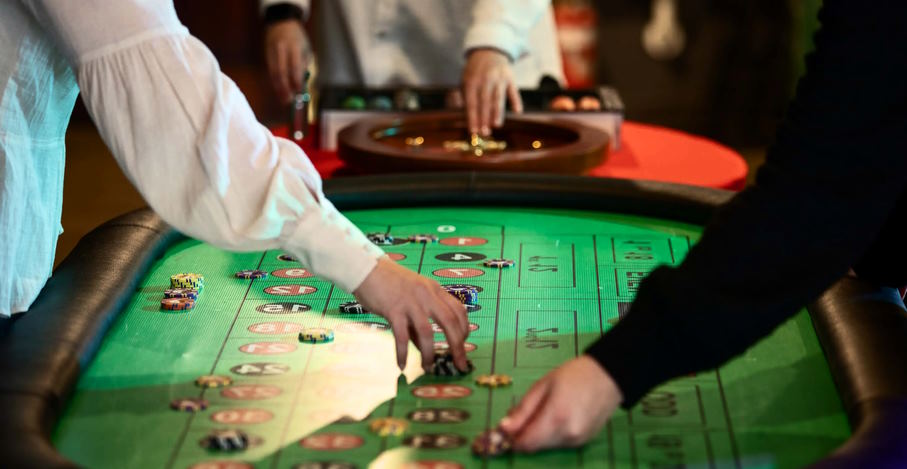
Gambling sits at a fascinating crossroads where chance, decision-making, and mathematics collide. Some games reward experience and strategy, others rely almost entirely on randomness, and many fall somewhere in between. Understanding how skill, luck, and probability interact can help players make clearer decisions and avoid common misconceptions.
This article breaks down the mechanics behind gambling in a practical, no-fluff way—so you know what really influences outcomes.
What Is Gambling at Its Core?
At its simplest, gambling is the act of risking money or something valuable on an outcome that is uncertain. The result may depend on random events, player decisions, or both.
Key elements common to all gambling activities include:
-
A wager (money, chips, or value placed at risk)
-
Uncertainty about the outcome
-
A potential reward greater than the original stake
What separates one game from another is how much control the player actually has over the result.
The Role of Luck in Gambling
Luck refers to outcomes determined by randomness rather than influence or control. In many gambling games, luck dominates every decision.
Examples of luck-driven games:
-
Slot machines
-
Roulette
-
Lottery games
-
Scratch cards
In these games:
-
Every outcome is independent of the last
-
No strategy can change the underlying odds
-
Results cannot be predicted in the short or long term
Even if a player wins repeatedly, it does not mean their chances have improved. This misunderstanding is often called the gambler’s fallacy—the belief that past results affect future outcomes when they do not.
Skill-Based Gambling: Where Decisions Matter
Some forms of gambling involve skill, meaning player knowledge, experience, and decision-making directly affect results.
Common skill-influenced gambling activities include:
-
Poker
-
Sports betting
-
Blackjack (to a limited extent)
-
Certain betting exchanges
In these games, skill may involve:
-
Reading opponents or situations
-
Managing bankroll responsibly
-
Understanding statistics and probabilities
-
Making optimal decisions over time
Skill does not eliminate luck, but it can reduce its impact across many rounds of play.
Understanding Probability in Gambling
Probability is the mathematical backbone of gambling. It measures how likely a specific outcome is to occur and is usually expressed as a percentage or fraction.
For example:
-
A fair coin flip has a 50% chance of landing heads
-
Rolling a specific number on a six-sided die has a 1 in 6 chance
Casinos use probability to design games with a built-in advantage known as the house edge.
What Is the House Edge?
The house edge represents the average profit a casino expects to make over time from a game. It does not guarantee losses in the short term, but it ensures profitability in the long run.
Important points about house edge:
-
Lower house edge means better odds for players
-
It applies over thousands of bets, not individual rounds
-
Skill can sometimes reduce, but not eliminate, the edge
For example:
-
Blackjack played with optimal strategy has a relatively low house edge
-
Slot machines typically have higher house edges due to pure randomness
Short-Term Variance vs Long-Term Reality
One of the most misunderstood aspects of gambling is variance—the natural fluctuation of results over time.
In the short term:
-
Players can win or lose unpredictably
-
Luck may overpower skill
-
Streaks feel meaningful but often aren’t
In the long term:
-
Probability takes over
-
House edge becomes unavoidable
-
Skill shows value only in games that allow it
This is why professional players focus on large sample sizes, not single sessions.
Can Gambling Ever Be Beaten?
Whether gambling can be beaten depends entirely on the game.
Games that cannot be beaten:
-
Slots
-
Roulette
-
Lottery games
Games that can sometimes be beaten with skill:
-
Poker (against other players)
-
Sports betting (with deep analysis and discipline)
-
Blackjack (under specific rules and strategies)
Even then, success requires:
-
Consistent decision-making
-
Emotional control
-
Long-term perspective
Responsible Understanding of Gambling
Knowing how gambling works is essential for staying in control. Gambling should be viewed as entertainment, not income.
Smart players:
-
Set strict limits
-
Accept losses as part of the experience
-
Avoid chasing losses
-
Understand odds before placing bets
The clearer your understanding of skill, luck, and probability, the less likely you are to make costly mistakes.
Frequently Asked Questions (FAQ)
Is gambling always based on luck?
No. Some games involve a combination of luck and skill, while others rely almost entirely on randomness.
Can probability guarantee a win?
Probability predicts likelihood over time, not certainty in individual outcomes. No result is guaranteed.
Why do casinos always make money?
Casinos design games with a mathematical advantage that ensures profit over large numbers of bets.
Does experience help in all gambling games?
Experience helps mainly in skill-based games. In purely random games, experience does not change outcomes.
What is variance and why does it matter?
Variance explains why short-term results can differ wildly from expected odds, even when probability stays constant.
Are winning streaks meaningful?
Not usually. Most streaks are statistical noise rather than proof of improved odds.
Is there a safest way to gamble?
The safest approach is to gamble for entertainment only, with fixed limits and a clear understanding of the odds.

Comments are closed.